India, the site of the Buddha's great awakening, has a rich an ancient history of enlightened women, both monastics (Skt: bhiksuni, Pali: bhikkhuni) and lay women (upasika) savika disciples of the Buddha -- essential aspects of the Buddha's Four-fold Assembly of disciples -- the bearers of his inheritance. This blog shares with you some of the wealth of their long and contemporary history, together with sites, writings and happenings of interest.

Monday, April 23, 2012

Sakyadhita--Daughters of the Buddha--Return to India


The 13th Sakyadhita International Conference on Buddhist Women was held in Vaishali (Bihar) India, January 5-12, 2013. Website of the Conference.


Vaishali, located near Patna, the capital of the Indian state of Bihar, possesses an incredibly rich past in the history of Buddhism. Vaishali is one of The Eight Great Places that were either identified specifically by the Buddha (Lumbini, Bodh Gaya, Sarnath, Kusinara) or are places where a certain miraculous event is reported to have occurred. Sravasti was the Place of the Twin Miracle, and also the place where the Buddha spent the largest amount of time, being a major city in ancient India. Rajgir, another major city in India, was the Place of the subduing of Nalagiri, the angry elephant, through friendliness. Sankasia was the Place of the descending to earth from Tusita heaven (after a stay of 3 months teaching his mother the Abhidhamma). And Vaishali was the Place of receiving an offering of honey from a monkey. Vaishali was the capital of the Vajjian Republic of ancient India.
For Buddhist women, Vaishali is twice notable. First Lord Buddha ordained the first woman, his stepmother and aunt, Mahaprajapati, at Vaishali. Second he delivered his last sermon at Vaishali and announced his Parinirvana there. Vaishali was also the venue for the second Buddhist Council a hundred years after his demise.
There is additional information about Vaishali and its Buddhist history on the Wikipedia page.

Tuesday, April 17, 2012

The Bodhgaya Shrine and Noble Lady Ayya Kurangi


Whether you have been to this most sacred of Buddhist sites, or for when you come again, to this, the site of the Buddha's enlightenment, you may like to know a little more of its history.

Most Buddhists and most Indians know the site was established first when the Buddha awakened there, and later by the meritorious devotions of 3rd century BCE unifier of the Indian subcontinent, Ashoka the Great.

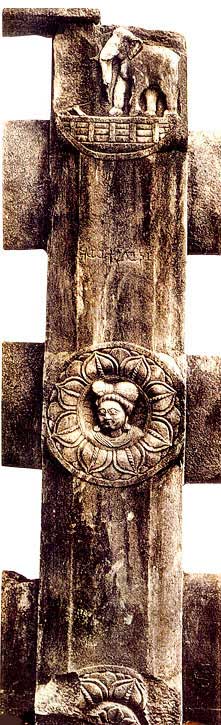
Few however know that the five main focal points of the Mahabodhi shrine, other than the temple itself, were established by a Magadhan woman, the Dowager Queen Kurangi, together with her friends and relatives.  The focal points include the Vajrasana (the Diamond Seat), the Patanacankrama (the Walking Path), the ornate Railings demarkating the shrine and the Monastery (now under the raised earth surrounding the shrine).  There is speculation as to whether Ayya Kurangi then retired from royal leadership to live the monastic life at the Bodhgaya shrine.

The railings, now safely in the Bodhigaya Museum, bear inscriptions of the donors and their gifts, and can be seen by visitors to the museum.

The inscription on the railing here reads: "the gift of Ayya (Noble Lady) Kurangi".

Dowager Queen Kurangi was wife of Maghadan Emperor Indragnimitra, and mother of Brahmamitra who succeeded to the throne when she retired after his father had passed away. Queen Nagadevi was her daughter-in law.

As recorded in Wikipedia:


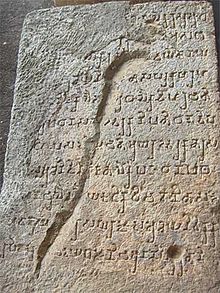
An inscription at Bodh Gaya at the Mahabodhi Temple records the construction of the temple as follows: "The gift of Nagadevi the wife of King Brahmamitra" So then this further means that the Sungas were in support of Buddhism. Another inscription reads: "The gift of Kurangi, the mother of living sons and the wife of King Indragnimitra, son of Kosiki. The gift also of Srima of the royal palace shrine."[16][17]

To learn more about the Indian ruling dynasties of the period, see Wikipedia here.

More information on the Bodhgaya inscriptions can be found in the article "Old Buddhist Shrines at Bodh-Gaya Inscriptions" by B.M. Barua in The Indian Historical Quarterly, Vol. VI, No. 1, MARCH, 1930, pp. 1-31 here.


There is also a fine article on the development of the Bodhgaya shrine "Bodh Gaya: A Good Place for Striving -- Bodhgaya from 500 BCE to 500 CE" found here

Sunday, April 1, 2012

Bhikshuni Asramaya of Sthaviri Sanghamitra and Her Mother at Sanchi-Vidisha


--
Bhiksuni Asramaya of Sthaviri Sanghamitra (Pali: Bhikkhuni Upassaya of Sanghamitta Theri) and her Mother, Vedisa Devi (Queen of Vedisa) in Vidhisa, nearby Sanci, Bhopal State
--

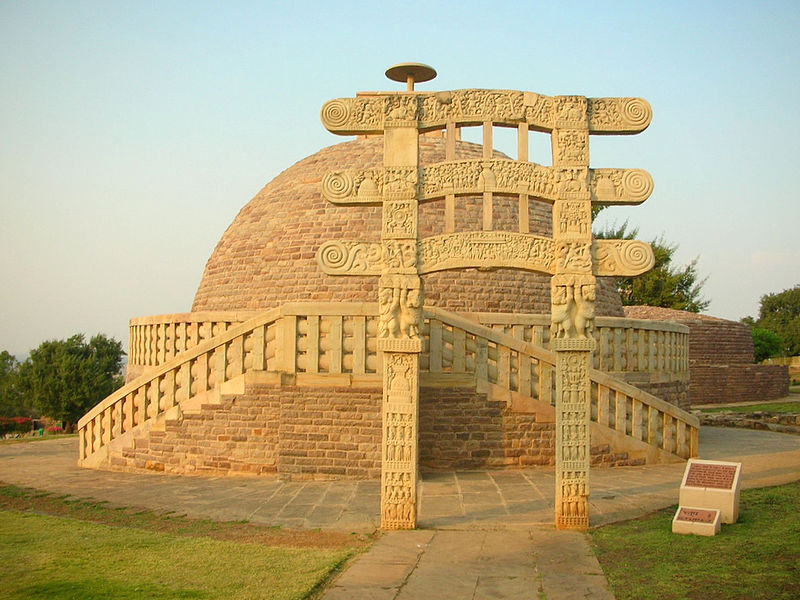
The stupas on the hill at Sanci in India's Bopal State, from the 3rd century BCE, are the oldest standing stone structures in India and a UNESCO World Heritage Site. 

They are also well known in studies of Indian women in Buddhism for their plentiful votive inscriptions preserving names of both upasikas and bhikkhunis who were active donors and supporters of their construction.

Little is generally known though of the monastery of the venerable mother Sanghamitra Sthaviri, daughter of Vedisa Devi and the Emperor Ashoka, sister of Sthavira Mahendra (Mahinda Thera) and mother of Sramanera Sumana.  Sanghamitra Sthaviri is well known for her founding the Indian Bhiksuni Sangha internationally in Sri Lanka, and is remembered as one of our world's first known international women religious emissaries.


Sthaviri Sanghamitra Arriving With Bodhi Vriksha Sapling to Anuradhapura, Sri Lanka


Once, in conversation with the venerable elder Sri Lankan bhikkhu Bhante Henepola Gunaratana, he mentioned this: 

"I stayed in Sanci for two years and almost every evening walked to the ruins of Vidhisa Devi's monastery. Sanci is only 6 miles from Vidisa, which until 1956 was known as Bhilsa. Sanci is the only place where three Sthupas have been built by Emperor Asoka--the big one enshrining the relics of the Buddha and the other two enshrining the relics of Ven. Sariputta and Ven. Moggallana. To the South of these three Sthupas is the Bhikkhuni monastery built by king Asoka. The head Bhikkhuni, I heard [not confirmed] was Ven. Vidhisa, mother of Ven. Mahinda and Ven. Sanghamitta. According to Mahawamsa Venerable Mahinda went to Sanci to see his mother who was a Bhikkhuni then, before he went to Sri Lanka to establish Buddhasasana there. As I stayed there for two years, I remember this place very well."

See his walking path on Google Maps from space here.

Bhante G, as he is affectionately known to his students, had stayed in India as a Buddhist missionary before coming and beginning his teaching career in the USA from whence he became famous around the world.  

The stupas at Sanci are well known, also world famous treasures of Buddhism. Vidisha (Pali: Vidisa) Devi's ancient monastery/nunnery is not well known.  I wish that anyone who knows of it or has photos of it would please contact us.  


Sanci Stupa 3

Ancient Monastery at Sanci

The photos of Sanci above and below here are from Wikipedia's Collective Commons. 

Sunday, January 8, 2012

Ancient Bhiksunis Memorialized at Rock Cut Cave Monasteries in the Deccan


 “The Thēra Dhammarakkhita the Yōna, being gone to Aparāṇtaka
and having preached in the midst of the people the 
Aggikkhandhopama-sutta (of Aṇguttarnikāya)
gave to drink of 
the nectar of truth to thirty-seven thousand living beings who had come together there,
they who perfectly understood truth 
and untruth.
A thousand men and yet more women went forth 
from noble families and received the pabbajjā.”

--Mahāvaṃśa XII, Dīpavaṃśa-VIII.7

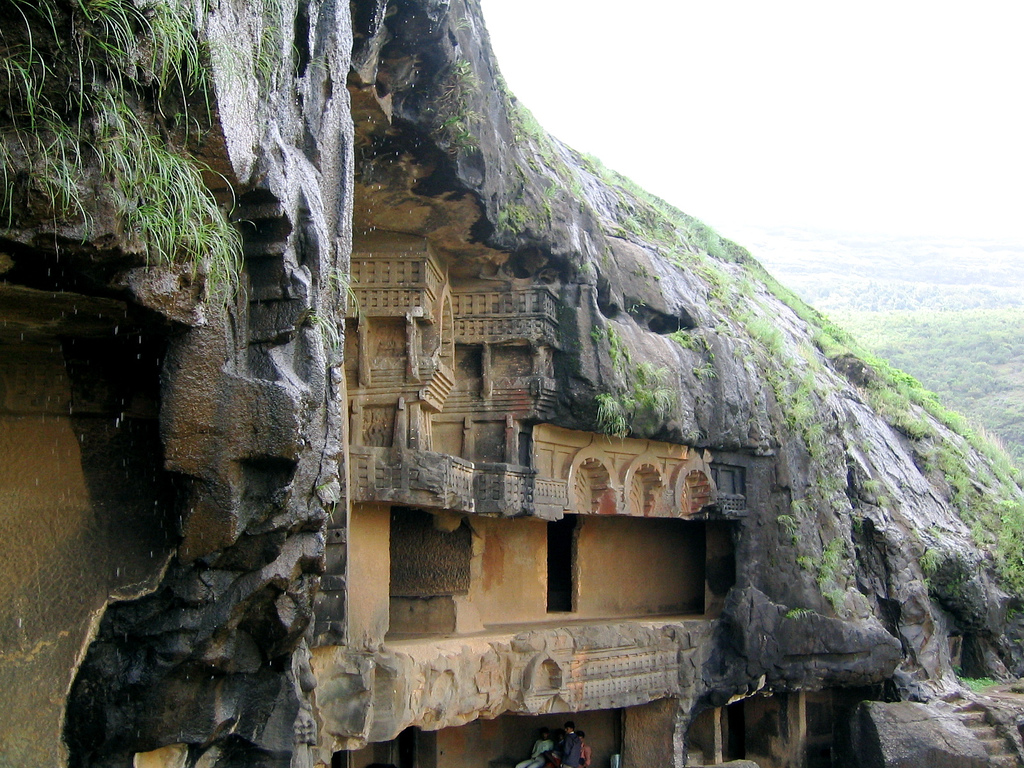
Bhaja (Bhaje) Leni Ancient Rock-cut Caves Monastery,
near neighbor to Karle Caves, not far from Ajanta and Ellora Caves, Maharashtra 


As a result of knowledge gained in India in the past five years, we now know certainly that the assertions made by an eminent and respected scholar of Indian & Southeast-Asian Buddhism (Fragile Palm Leaves Foundation, Bangkok) at the First Global Congress on Buddhist Women that:

(paraphrased) 'not a single one of the ancient bhikkhuni sangha monasteries in india has ever been found nor remains' is seemingly incorrect. And thus, the assumption he stated based upon these statements: 'thus, we may reasonably assume that the Bhikkhuni Sangha in india was both small, not-well-supported and short-lived' is also seemingly incorrect and no longer tenable.

"The Junnar- Śivnērī site provides a very crucial reference to the existence of a women's monastery (Bhikkhunī Upāssaya) in Deccan. Patibhādak Girībhutī, and his wife, Sivapālnikāy, donated a permanent endowment for the Dharmōttariya women's monastery, which should be in the vicinity of the ancient town of Junnar."
--Dr. Rupali Mokashi


A little more than one month past, i also had the honor to set foot on the stones of the ancient theravadan bhikkhuni sangha monastery at Bhaja (Bhaje) in Maharashtra, India.  Bhaja is one of the main rock-cut cave monasteries in Aurangabad, and was developed over a seven hundred year period with the sponsorship of generation after generation of wealthy merchants.  It housed the Indian Bhikkhuni Sangha for more than 1,000 years. See the Bhaja Leni (Caves) here on the Columbia University website, where the image above is also from.

It's near neighbor Karle Caves, bears many rock-cut donative inscriptions featuring Buddhist monastic women from the 2nd century BCE through the 2nd century of the Common Era, a period of roughly five hundred years.  

"Kārlē 
1. An inscription on the base of a veyikā to the left of the central door of the Great Caitya Hall records the donation of a rail by Bhikkhunī Kōdī, the mother of Ghuṇika.  (Burgess- Indraji 1881:35 & Epigraphia Indica, VII, p. 1-12 and Epigraphia Indica, X, p. 119, n. 1104) 
2. An inscription on the belt of a rail pattern on the inner face of the sill of the largest window of the Great Caitya Hall, records the donation of Bhikkhunī Asādhmitā (Burgess- Indraji 1881:33& Epigraphia Indica, X, p. 118, n.  1098, and Epigraphia Indica, VII, 1-12) 
3. An inscription in a recess over a water cistern at the end of Cave Thirteen records that women disciples (antēvāsinī) of a bhadanta (teacher) donated a cave and a water cistern. (Burgess- Indraji 1881:37 & Epigraphia Indica, X  p. 120, n.  1107) As the record is much mutilated, only the name of Antēvāsinī (pupil) Usabahā can be read.
  
Rock-cut Inscription at Kanheri (Skt: Krishnagiri) Caves North of Mumbai
The Kanheri (Skt: Krishnagir=Black HIlls) Caves off the Arabian Sea on India's west coast just north of Mumbai in Sanjay Gandhi National Park are also an especially important site for women in Buddhism.  Inscriptions on the Kanheri Caves walls show lineage succession within the Bhiksuni Sangha from teacher to student over monastic generations.  

"...these caves date from 1st century BC to 9th century AD. The earliest are 109 tiny rock-cut cells, carved into the side of a hill. These are spartan and unadorned. Each cave has a stone plinth for a bed. A congregation hall with huge stone pillars contains thestupa, a Buddhist shrine. Farther up the hill are the remains of an ancient water system, canals and cisterns that collected and channelled the rainwater into huge tanks."

The Kanheri Caves show layers of occupation over time.  It appears to be an originally Theravada cave monastery, that later also become a Mahayana and Vajrayana shrine.  In addition to the simplicity of the cave monastery and stupiary, there are shrine images of Avalokitesvara Bodhisatva in Cave 41, as well as the female form Bodhisattva Tara.  

These inscriptions, memorializing dedications made by bhiksunis or on their behalf, have been translated from the Kanheri Cave stone:

"Donations of Buddhist Women Religious at the Rockcut Caves in Deccan:
   The votive inscriptions in the rock-cut architecture of ancient Deccan have recorded the names of many bhiksunis and their teachers. They allow us to glean information about the Bhiksuni Sangha in Western India during the early centuries of Christian era. Though much scholarly literature is available on the rise and growth of Buddhism in ancient India through literary and archaeological data, the role of women as believers in the Buddhadharma, actively propagating Buddhism in ancient India in general and Western India in particular, needs more attention. In the superstructure of power and patronage, the role of bhiksunis as benefactors of Buddhism needs to be highlighted. These monastic women also showed a vision of immortalizing the details of the donations in which they participated by engraving them in the caityas and vihāras, and by selecting visually more accessible surfaces.
Seventeen epigraphs that document the donations of bhiksunis at Kānhērī, Kārlē, Kuḍā, Paunī, Junnar , Pitaḻakhōrē, and Śēlāravāḍī caves have been evaluated in this paper (see name below).
Kānhērī (Burgess Fergusson 2000:348)  
In Cave Fifty-four, the donation of the nun Therī Antēvāsinī Pavaītikā’ Pōṇakiasaṇā (a senior student of woman Preceptor Ponakiasana) , her sister (name not mentioned), and brothers who are identified as sramaṇa (monastic recluses) is recorded.   Pōṇakiasaṇā was the disciple of Thēra Bhadanta Ghōṣa . She donated the leṇa (cave) and pāṇīyapōḍhī (water cistern) for the welfare and happiness of the whole world. Pōṇakiasaṇā has another title, therī (elder bhikkhuni), indicating her superior status in the order. She was involved in arrangements for the donation of 200 pieces of currency called Kārṣapaṇa as a perpetual endowment for the monastery. Out of the interest accrued thereon, one-sixteenth share was meant for the clothes of the monastic community. (Gokhale1991:88 & Epigraphia Indica, X, p., 105, n. 1006)" 
Kanheri Caves Monastic Residential Area | Photo courtesy Jurate Nair


Further donative inscriptions are then listed in brief. As the area had a strong monsoon season and a period of seasonal drought, both water channeling and water storage and collection was of great importance.  The ancient permaculture-like natural water system still works today, in absence of residents.  Note the repeated donations of both caves and water cisterns. 
"1. In Cave Ninety-eight, the donation of Bhikkhunī Damīlā is recorded. She donated a cave and a water cistern. (Gokhale1991:147 & Epigraphia Indica, X p., 106,  n. 1014 )38 
2. In Cave Twenty-two, the donation of a water cistern by a bhiksuni disciple of Bhadanta Sagha addressed as Antēvāsinīya (pupil) of Pavajitīkāyā (Pali: Pavattini=woman preceptor/pabbaja teacher)____ (name lost) has been recorded. (Gokhale 1991:77) 
4. In Cave Ninety-three, donation of a water cistern by Jamadēvīkā, daughter of a goldsmith, Sivatana, along with Pavaītīkā Jamanasā has been recorded. (Gokhale1991:147) 
5 In Cave Sixty-five, a leṇa (cave) and water cistern has been donated by Pavaītīkā (woman preceptor) Sāpā , who identifies herself as the daughter of Kulapriya Dhamaṇak of Dhenukākaṭ. She herself was the pupil of the revered Thēra Bodhika. Sāpā’s sister, Ratīnikā (no monastic attribute suggests that she was a laywoman), and many relatives (nātīsambandhī) were co-donors. (Gokhale1991:91) This donation for the Buddhist Aparāsēliya sect was expected to earn puṇya (religious merit) for the parents of Pavaītīkā Sāpā.  
6. Cave number eighty-one, records the donation of a cave by merchant Navinaka and his mother Pavaītīkā (woman preceptor) Damāryā for the welfare of all. (Gokhale 1991:102)."
--adapted from: 
Unveiling Bhikkhunis in Oblivion: What Deccan Cave Inscriptions Reveal about the Ancient Bhikkhuni Sangha Epigraphical evidence for the pivotal role bhikkhunis played in preserving the Dhamma. 
by Dr. Rupali Mokashi 

From these inscriptions, we note the presence of a number of Buddhist women monastic preceptors, their students, and their own teachers.  It is clear that bhiksunis could be students of both bhiksu and bhiksuni teachers, but that their preceptors were women. 


See the video "Kanheri Caves Decoded" here.

Kanheri Caves in Forest
Photo by Indianature


Getting there 
The national park is one kilometre from Borivli station. 
Entry fee to the park is Rs 20 per head. 
Park timings: 7.30 am to 7.30 pm (the earlier you go, the better it will be)
The first Kanheri bus service starts at 9 am. Ticket costs Rs 20 one-way.

Sunday, April 4, 2010

Bhiksuni Upasraya (Pali: Bhikkhuni Upassaya) Discovered at Sravasti (Pali: Savatthi)


Although we are rich in images of the ancient monastic and laywomen disciples of the Buddha's as they appear in their life stories and are blessed with records of their teachings as well, one thing that we of the Bhikkhuni Sangha have lacked, in comparison with the Bhikkhu Sangha, is a connection with these women's ancient monasteries and places of practice. 

However, this is changing.

Recently, the Archeology Department of India reported the discovery of a new site, an ancient bhikkhuni aramaya  (Skt: bhiksuni asrama) or upassaya (Skt: upasraya)  in the Jetavana at Savatthi  in India, where the Buddha spent at least 25 of the 35 Vassas of his life teaching after enlightenment.  This recent discovery, as reported in Yasodhara magazine, is especially interesting, not only because it is the first bhikkhuni aramaya in India to be rediscovered and authenticated, but because it is located right behind the Gandha Kuti of the Buddha in the Jetavana. 


 the new excavations as seen from space via Google Earth


map from Ven S. Dhammika's book shows the layout of the Monastery, Gandhakuti, and New Excavations


This archeological discovery potentially gives us a temporal image that has generally been lacking until now, an image of the relationship between the ancient bhikkhu and bhikkhuni Sanghas and the Buddha himself in the Buddha's lifetime, at the Jeta Grove in Anathapindika's Park, where the Blessed One spent the majority of his time in residence teaching, when not travelling throughout the neighboring Indian countries of his day.

 If you would like to volunteer for a little light research, to follow up on this news article in Yasodhara magazine with Loung Mae Dhammananda in Thailand and the Archeological Survey of India, please email: womeninbuddhismtour[at]gmail[dot]com. 
 
article from www.dhammadharini.net --> Dhammadharini News 

Thursday, January 15, 2009

Theravada Bhikkhuni Ordination in Maharashtra


On 15 January 2009, just over ten years after the ordinations that revived the Theravada Bhikkhuni Sangha in its homeland of India, once again, Indian women were able to be ordained.  


The ordinations were arranged by Ven. Bhiksuni Dharma Master Cheuh Men, Head of the Buddha's Light International Theravada Outreach Department in Sri Lanka together with the Sri Lankan Bhikkhuni Sangha and All India Bhikkhuni Sangha.


The women ordained included: 


Ven. Prjapati Bhikkhuni, Ven. Atapi Bhikkhuni, Ven. Charusheela Bhikkhuni, Ven. Buddhasavika Bhikkhuni, Ven. Sanghmitra Bhikkhuni, Ven. Dhammamegh Bhikkhuni, Ven. Dhammarakshita Bhikkhuni, Ven. Dhammadipa Bhikkhuni, Ven. Sanghpala Bhikkhuni, Ven. Parmita Bhikkhuni, Ven. Vidyavati Bhikkhuni, Ven. Prajapati Bhikkhuni, Ven. Utpalvarna Bhikkhuni, and Ven. Dhammashela Bhikkhuni.  


Venerable Bhikkhuni Sumitra Theri from Dambulla, Sri Lanka served as the Bhikkhuni Preceptor (Pali: Pavattini/Upajjha, Skt: Pravartini/Upadhyayini) with venerable bhikkhunis Dhammarakshani and Sumanpali serving as Kammavacacarinis. 


For the Confirmation of the Bhikkhu Sangha, Venerable Bhikkhu Sanghanand Mahather was the Presiding Bhikkhu Elder, with venerable bhikkhu mahatheras Vinay Bodhi and Sumangale serving as the Kammavacacariyas.  


There is a further article written about the ordinations that appeared in Yasodhara Magazine here.


To support the revival of the Bhikkhuni Sangha in India, contact Ven.Bhiksuni Dharma Master Cheuh Men of the Buddha's Light International Theravada Outreach Department, Susan Pembroke of the Alliance for Bhikkhunis, or Ven. Bhikkhuni Katayani of the All India Bhikkhuni Sangha.


Contact: 
Bhikkhuni Katayani Theri, Secretary

           All India Bhikkhuni Sangha
    Maha Prajapati Goutami Buddha Vihar,
        Kushinagar, Nagarjune Colony,
                 Nagpur - India.


Saturday, April 5, 2008

International Bhiksuni Parisad in Maharashtra


In December of 2007, three foreign bhikkhunis of Theravada tradition visited the Ambhedkarite Buddhists of Maharashtra participating in the International Bhikkhuni Parisad at Buddha Leni Caves Monastery in Aurangabad.  Approximately 4000 persons attended.  Participating bhikkhunis included Ven. Tathaaloka Bhikkhuni from the United States, Ven. Gunasari Bhikkhuni from Burma (Myanmar) and Ven. Satima Bhikkhuni from Sri Lanka, together with numerous Indian bhikkhunis.


foreign bhikkhunis arrive at Buddha Leni Caves Monastery in Aurangabad for Seminar


Seminar Attendees


Before arriving for the gathering, the bhikkhunis also participated in offering Bhikkhuni Training in Bodhgaya at the site of the Buddha's enlightenment in conjunction with the International Gathering for Recitation of the Pali-text Tipitaka beneath the sacred Bodhi Tree.  Following, they visited ancient bhikkhuni cave monasteries at Karle and Bhaje, as well as Kanheri Caves on the Arabian seacoast north of Mumbai.

The Indian Theravada Bhikkhuni Sangha had come to revival ten years earlier from the year 1998, when more than 10 Indian women fully ordained as bhikkhunis at the international ordinations in Bodhgaya.  To learn more about the Theravada Bhikkhuni Sangha in India, please see: http://tathaaloka.wordpress.com/.